
By Larissa Benavidez & Larissa Ventura
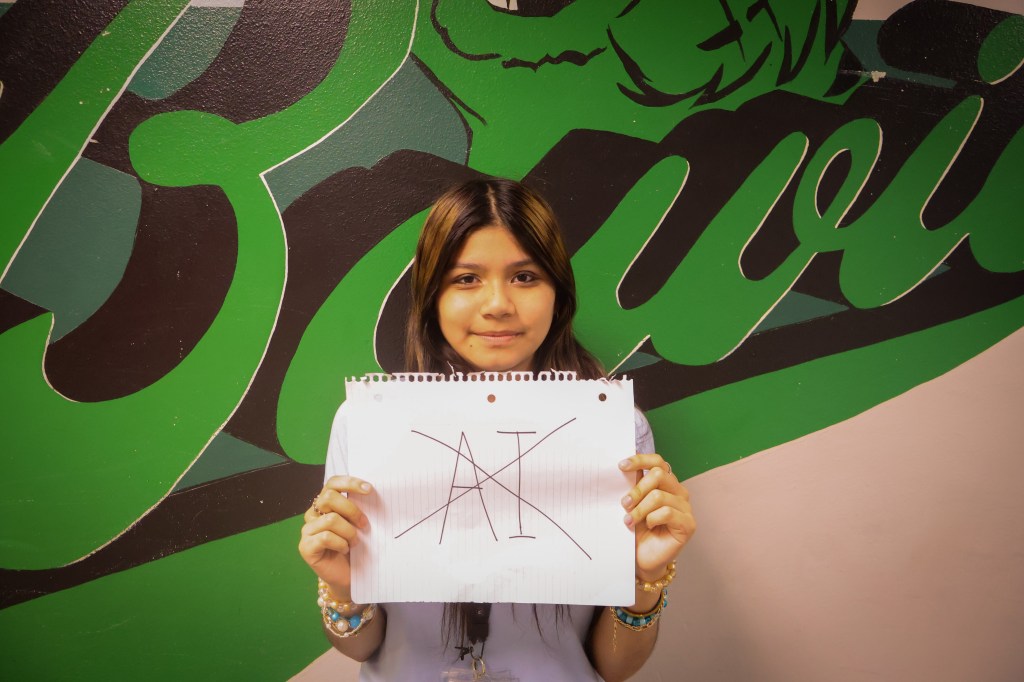
” [Gen-AI] is not a form of art. It’s a form of theft.”
Genesis Cruz – 8th Grade Bowie Artist
Artificial Intelligence (AI) is in many apps nowadays. For example, an app I’m sure many people use every day: TikTok. Your “FYP” is curated by an AI algorithm, but this isn’t a bad thing. Not all AI is harmful, but how can you tell the difference between AI harmful to our environment and AI that isn’t?
Machine learning (ML) is AI that helps computers improve through experience. It analyzes data to find patterns, so your feed on a social media app would be an example of this. A large language model (LLM) is a type of machine learning that analyzes texts and images to generate its own; ChatGPT is an example of such large language models. It’s important to remember that not all machine learning results in large language models, but all LLMs utilize machine learning. Why does this matter? Because the specific LLMs that power Generative AI’s are significantly more harmful to us and our environment than other types of machine learning.
Millions of people use generative AI, and thus LLMs, in their daily lives. This, and the fine tuning done on the models, draws large amounts of energy. Beyond the demand for electricity, a good amount of water is needed to cool the hardware. This strains municipal water supplies and disrupts local ecosystems. To cool their data centers, companies use chilled water. It’s estimated that each kilowatt hour of energy is equal to about two liters of water used for cooling.
You may be wondering how this affects us in general. Well, it affects us in many ways. One of the biggest is AI “art,” which is the use of generative AI to create images. To create AI images, the AI browses and scans many images across the web, which includes art made by real people. Most of the time, the artist does not consent to this. This may be familiar to you because, if you’ve noticed, it’s used a lot at our school.
“I dislike generative AI because it takes away jobs from artists, and as of recently, it’s starting to affect many more jobs in the creative field. Many artists live off the money they earn from commissions, and AI is beginning to take away their source of income.”
Genesis Cruz – 8th Grade Bowie Artist
Genesis Cruz, an 8th grader at our school, is one such artist who has been affected by the use of AI. When asked how she feels about the use of gen-AI, she stated, “I dislike generative AI because it takes away jobs from artists, and as of recently, it’s starting to affect many more jobs in the creative field. Many artists live off the money they earn from commissions, and AI is beginning to take away their source of income.” Research backs up her claim, showing there’s been a 13% decline in jobs since 2022, which we can infer is due to the increase in the use of AI.
Along with that, we also asked for her opinion on the use of AI-generated images at school. She said, “I think it’s a bad decision since, again, most artists live off commissions, and AI takes that away. Not to mention the fact gen-AI steals from artists to ‘create’ the things they ‘make.’ You have an art class, yet you use AI. That sounds pretty weird to me. It’s not a form of art. It’s a form of theft.”
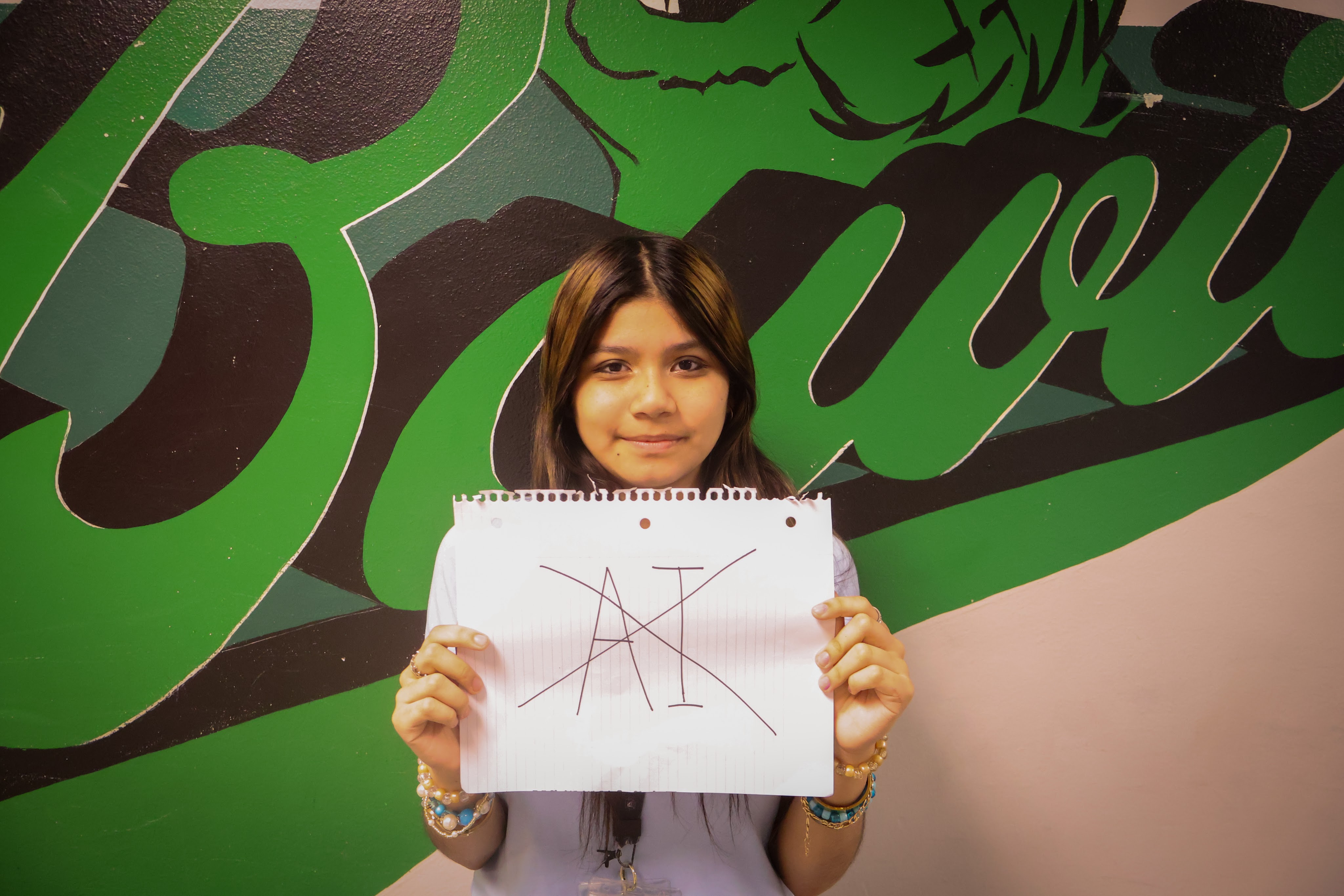
Even with how harmful gen-AI can be, realistically, there’s no way to completely get rid of it. Luckily, there are ways to run AI locally. There’s such a thing as an open-source LLM, meaning the code is open to the public and runnable on your own hardware. Using this method is significantly less harsh on our environment, as it only uses local sources unlike an LLM like ChatGPT. This is a more positive approach to using AI, offering a better option for those who like to use AI as a tool while still caring about the ethical and environmental aspects.

Leave a comment